What is failure?
There are two kinds, and they are not the same thing.
- Execution failure. You cannot build the thing on time and on cost.
- Monetizing failure. You build it, but it never earns the money back.
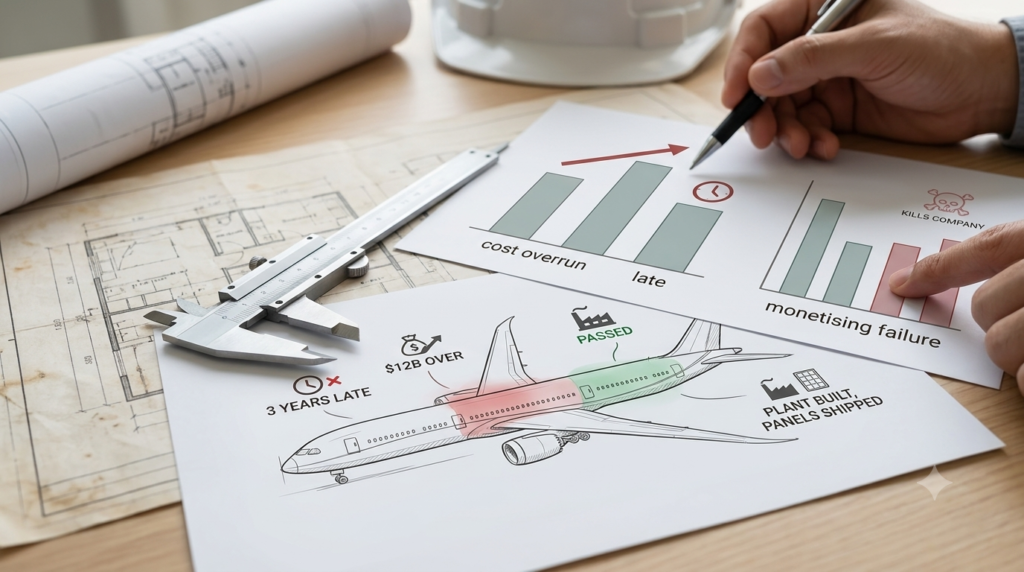
The two run independent of each other. A project can pass one and fail the other.
Solyndra built its factory. The plant worked. Panels went out of the door. The company was bust within two years, because the market it was built for had gone. That is a monetizing failure.
The Boeing 787 came almost three years late, and billions over budget. Boeing has sold more than a thousand of them since. That is an execution failure, and the plane may yet pay for itself.
So, when someone tells you a project failed, ask which kind they mean. Most people mean the first. It is visible and it has a date on it. The second one is the one that kills the company.
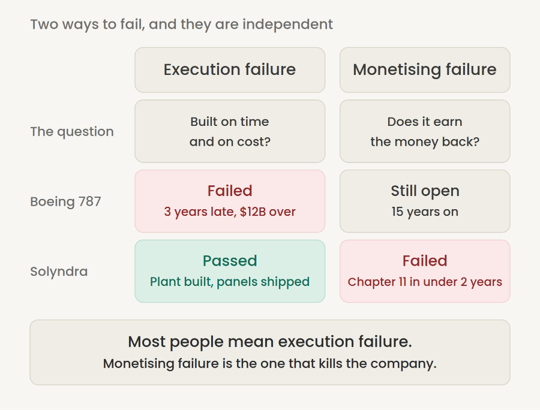
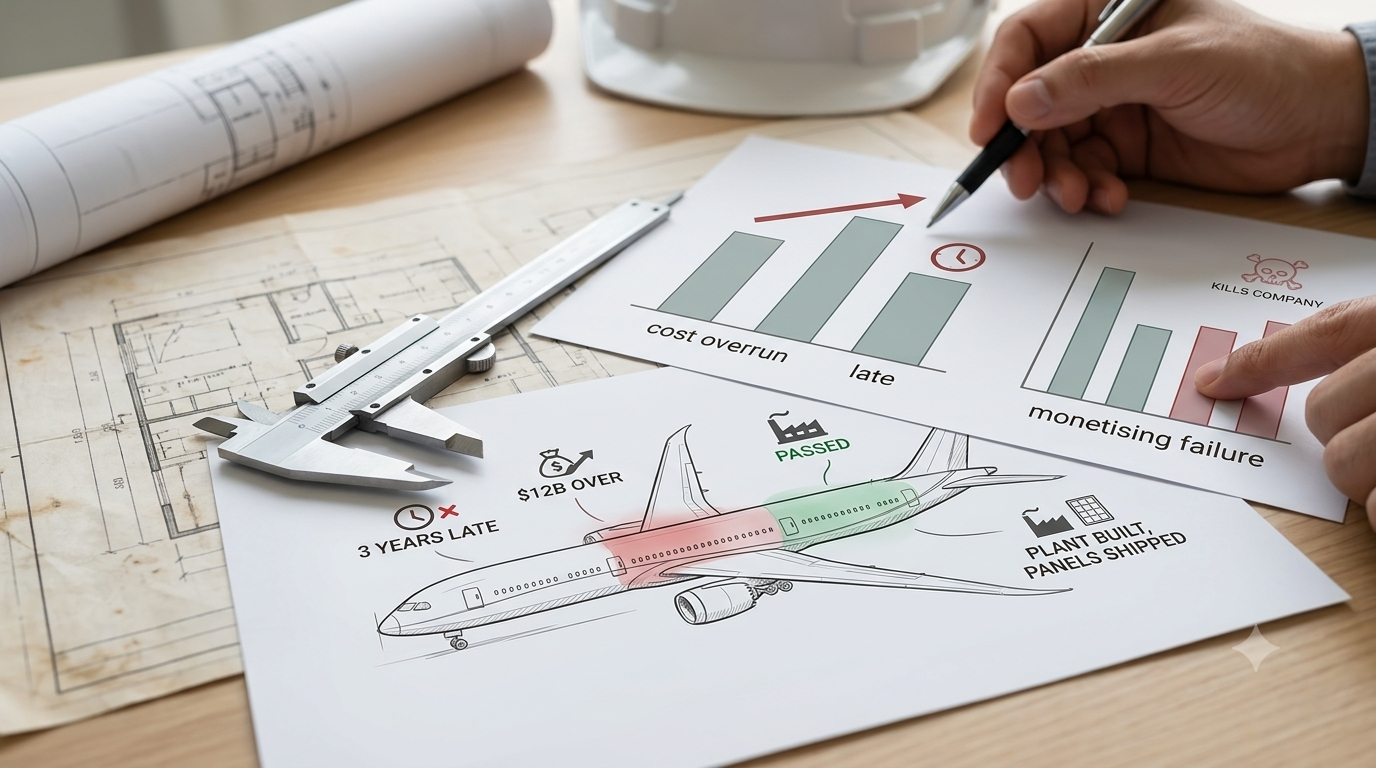
Figure 1: Two ways a capital project can fail. A project can pass one test and fail the other.
Building it is hard. Don’t believe me? Check the numbers.
Bent Flyvbjerg at Oxford holds the biggest dataset on this. About 90% of megaprojects run over budget, over time, or both. Cost overruns on infrastructure average between 20.4% and 44.7%, depending on the type of asset. He blames two things. One is optimism bias. The other is strategic misrepresentation, which is a polite way of saying the numbers were written to get the project approved, not to be right.
McKinsey’s figures are worse at the top end. Of megaprojects above $1 billion, 98% run more than 30% over cost. 77% run at least 40% late. In a study of 41 mining projects above $500 million, only 20% came in with no overrun at all.
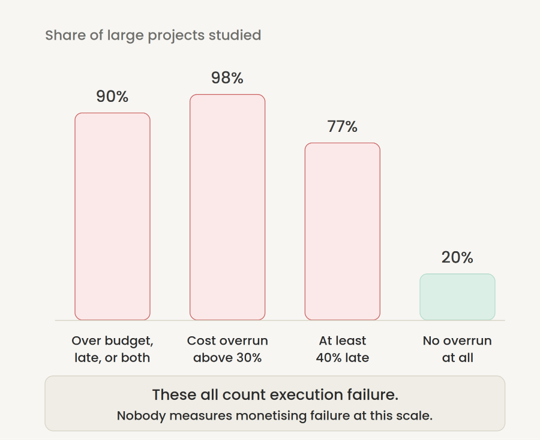
Figure 2: Sources — Flyvbjerg (all megaprojects); McKinsey (projects above $1bn); McKinsey (41 mining projects above $500m capex).
Every one of those numbers counts execution failure. Nobody has run a study that big on monetizing failure.
The nearest thing is the work on takeovers. McKinsey, HBR and KPMG all put the share of deals that miss their promised value at between 70% and 90%. The reason named most often is paying too much in a contest.
The five causes
Each cause below gets one case from outside India and one from inside it.
| Cause | Global case | Indian case |
| Debt | Energy Future Holdings, USA. $45bn buyout, bankrupt in 7 years | Suzlon. Debt-funded buying spree in Europe, $209m bond default in 2012 |
| Winner’s curse | AOL Time Warner. $165bn deal, $99bn written off | Tata Steel and Corus. Won a nine-round auction by five pence a share |
| Someone else’s price | Solyndra. $733m plant built on silicon staying dear | Tata Power Mundra. A 25-year price promise made on $35 coal |
| Political and rule change risk | 214 Indian coal blocks cancelled by the Supreme Court in one morning | |
| Poor execution | Boeing 787. Three years late, about $12bn of cost | OPaL Dahej. Built for 2.4 times the first estimate |
1. Debt (leverage)
In 2007 three buyout firms, KKR, TPG and Goldman Sachs, bought a Texas power company called TXU for $45 billion. It is still the largest buyout of its kind ever done. About $40 billion of the price was borrowed.
The idea made sense at the time. TXU ran coal and nuclear plants. In Texas, gas plants set the price of power. So, if gas stayed dear, TXU’s cheaper plants would earn a fat margin. Gas traded near, $8 per unit when the deal closed. It touched almost $13 in 2008.
Then shale gas arrived. The gas price fell to about $1.95 by April 2012. Energy Future Holdings, as TXU was renamed, went bankrupt in April 2014 owing, about $42 billion. KKR wrote off about 90% of what it had put in. Warren Buffett held $2 billion of the bonds and lost $873 million.
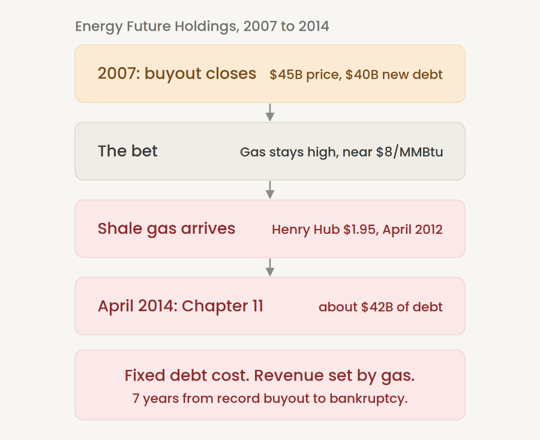
Figure 3: Energy Future Holdings, 2007 to 2014. The interest bill did not move. The revenue did.
Suzlon reached the same place from the other side. Tulsi Tanti built a real business making wind turbines. Then he bought his way up the chain with borrowed money. Hansen Transmissions in 2006. The German turbine maker REpower in 2007.
Here is the detail that killed it, and nobody plans for it. Suzlon borrowed in India against cash that sat in Germany. German law would not let it move that cash out. REpower held about EUR 300 million. Suzlon could not touch a rupee of it to pay the debt it had raised to buy REpower.
In October 2012 Suzlon failed to repay bonds worth about $209 million. It was the biggest bond default by an Indian company up to then. Debt was still ₹14,281 crore on 31 March 2015. Suzlon sold Senvion, the renamed REpower, to Centerbridge in 2015 for about $1.1 billion. The bond problem outlived the sale. Another $172 million went unpaid in July 2019.
In both cases the debt set a deadline. Gas prices would have fallen with or without the TXU deal. German law applied to Suzlon whether it borrowed or not. What the debt did was fix the interest bill while the income moved around. That leaves you a countable number of months to be right. Both firms ran out of months.
2. Paying too much to win (the winner’s curse)
In January 2000, AOL bought Time Warner in a deal worth about $165 billion. It was the largest merger ever announced.
Look at who bought whom. Time Warner was the far bigger firm, and it owned CNN, Warner Bros and Time magazine. AOL sold dial-up internet, the kind that beeped when you plugged in the phone line. Yet AOL’s owners ended up with 55% of the new company. The small fish ate the big one.
AOL could do this because it paid with its own shares instead of cash. Its share price was riding the dot-com boom, so on paper those shares were worth a fortune. Handing them over cost AOL nothing on the day it signed.
Then the boom ended and the shares fell.
Now the company had to say what it had really bought. It had put the deal on its books at a value of about $99 billion, and in 2002 it admitted that value was gone. The loss for the year came to $98.7 billion. No US company had ever lost that much in a single year.
There was more to come. While the deal was being talked about, AOL had puffed up its advertising sales figures. It later paid $300 million to settle with the market regulator and $210 million to settle with the justice department. By 2009 the two firms had split up again.
Tata Steel and Corus is the clearer case, because you can watch the price climb in public.
Tata opened at 455 pence a share in October 2006. That valued Corus at £4.3 billion. Brazil’s CSN came back at 475p. Tata went to 500p. CSN went to 515p. The UK Takeover Panel then called an auction. It ran through the night of 30 January 2007, across nine rounds. Tata closed it at 608 pence, or £6.2 billion. CSN’s last offer was 603p. Tata won by five pence a share.
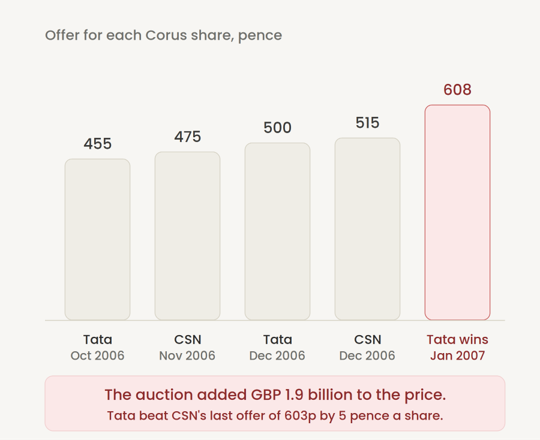
Figure 4: The Corus bid ladder, October 2006 to January 2007. Source — Tata Steel exchange announcements.
Bidding against a live rival added £1.9 billion to the price. That is 34% more than Tata’s own opening offer, for an asset that had not changed in three months.
The rest is in Tata Steel’s own accounts. In 2014-15 the company cut ₹6,500 crores off the value of its assets. About ₹5,000 crores of that was the UK long products business, which was then carried at nothing. In 2016 it sold that business to Greybull Capital for £1. The Scunthorpe works, part of what Tata had outbid a Brazilian steelmaker to own, went for the price of a cup of tea.
This applies to any contest, not just takeovers. When several well-informed bidders price the same asset, the winner is the one who guessed highest. Winning tells you that you were the most wrong in the room. The only defense is a price you set before the bidding starts, and the nerve to walk away.
3. A bet on someone else’s price (input-output mismatch)
Solyndra made a tube-shaped solar panel that used no polysilicon. Every rival panel did. That worked as long as polysilicon stayed dear, because Solyndra’s costs went around it.
Polysilicon sold for about $475 a kg in February 2008. By May 2009 it was about $73. By December 2011 it was under $30. More than 90% off in under four years.
Solyndra had raised $1.5 billion. About $1 billion of that was private money and $535 million was a loan backed by the US government. It built a $733 million plant. It broke its loan terms in late 2010 and went bankrupt in September 2011. More than 1,100 people lost their jobs that day.
The plant was fine. Solyndra needed a rival’s input price to stay high for the whole life of that plant. It held for about a year.
India’s version is Tata Power’s 4,000 MW plant at Mundra, and it is worse, because Tata built it well and delivered it early.
To win the job in 2006, Tata had to name a price for its electricity and hold that price for 25 years. The plant would burn coal shipped in from Indonesia. Coal then cost $35 to $40 a ton.
The trap sat inside that promise. If coal got dearer, Tata could pass only about 45% of the extra cost on to the buyers. It had to swallow the rest.
In September 2011 Indonesia changed its rules. Coal sold abroad now had to be priced against world markets, and world prices were far higher.
Tata told the regulator what this did to the plant. It was losing about 67 paise on every unit of power it sold. That is the same unit you see on your own power bill. Over a full year it added up to about ₹1,800 crore.
The accounts caught up fast. In 2011-12 Tata Power cut the plant’s value on its books by ₹1,800 crore. A cut like that is a company admitting an asset is worth less than it paid. Nine months later it cut another ₹600 crore. By then the plant had lost more than ₹2,500 crore in total, and Tata said its own money in the plant was close to wiped out.
Tata had seen the fuel risk coming and tried to cover it. Years earlier it had bought stakes in two Indonesian coal mines. The idea was neat. If coal got dearer, the plant would lose money, but the mines would earn more.
The cover was too small, because these were minority stakes, and Tata did not get to keep it. Banks’ lending to the plant took the mine income to pay down its ₹14,000 crore of debt. The 25-year price promise on the power stayed exactly where it was.
One question does most of the work here. It is easy to ask and hard to answer honestly. Which price does this project need to stay where it is, and for how many years?
4. Political and Regulatory risk
Acacia Mining dug all of its gold in Tanzania. It shipped part of the output out as concentrate, which is half-processed ore that gets refined abroad. In March 2017 the government banned those exports. It wanted the refining done at home. A third of the company’s output stopped moving that week.
Then came the bill. In July 2017 the tax authority told Acacia it owed $190 billion. That was $40 billion of unpaid tax going back to 2000, plus $150 billion of interest and penalties on top. Acacia earned about a billion dollars a year. The bill came to roughly 190 years of everything the company made. The shares fell 21% in a day. They had already lost two thirds of their value since the export ban.
Two years later the fight ended, and it is worth looking at where. Barrick, which owned most of Acacia, bought out the rest and settled with the government itself. It paid $300 million. Tanzania got a free 16% of each of the three mines and half the economic benefit from them from then on.
Now read those two numbers together. The claim was $190 billion. The settlement was $300 million. That is about one part in six hundred. The bill was never really a tax bill. It was an opening position, and it worked, because a mine cannot be moved and a government can wait longer than a shareholder can.
India’s version arrived on a single morning, and nobody was arrested.
On 24 September 2014 the Supreme Court cancelled 214 of the 218 coal blocks the government had handed out between 1993 and 2010. A month earlier the same court had ruled that the way they were handed out was illegal. Blocks that were already mining got six months to stop. Every company that had held one was told to pay ₹295 for each tonne it had already taken out.
Hindalco lost three blocks, one of them already producing. It told the exchange, that the levy alone would cost it about ₹500 crore. The bigger loss sat upstream of that. The company had built an aluminum smelter for about ₹10,500 crore, right beside a block it was given in 2006 and never got to mine. Its 2014-15 annual report reads as a year spent hunting for coal. Hindalco then went into open auctions to buy coal it had already been given once.
Hindalco was not found to have done anything wrong, and the court was fixing a real problem. That is the point. Your return depends on a rule staying put.
5. Poor execution
Boeing farmed out about 65% of the 787 airframe to more than 50 partners around the world. Airbus was reported to farm out around 52% at the time. Boeing had built its aircraft largely in-house for decades, so this was a change of kind, not of degree.
The partners could not deliver finished, matching sections on time. Several farmed their own work out again, further down, and Boeing could not see past the first tier. Sections turned up needing rework. The plane ran almost three years late. One academic estimate puts the penalty cost near $12 billion. Boeing ended up buying Vought and its share of Global Aeronautica to pull the work back inside.
OPaL is the Indian case, and the numbers all sit in ONGC’s filings.
ONGC Petro additions Ltd (OPaL) was set up in November 2006 to build a 1.1 million ton petrochemical complex at Dahej. The cost at conception was ₹12,440 crore. By the time the project was rated for its loans it had become ₹27,011 crore, aimed at June 2015. It went commercial in January 2017 at about ₹30,000 crore, roughly ₹19,000 crore of it borrowed.
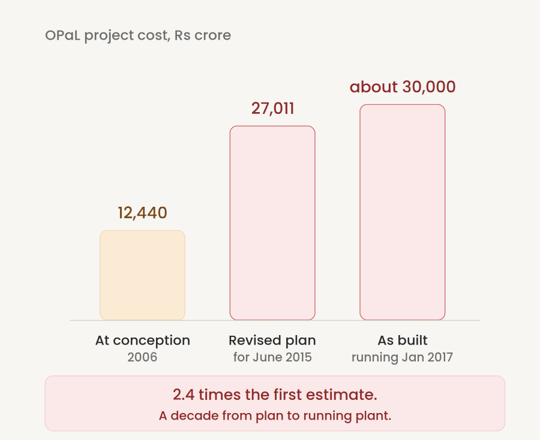
Figure 5: OPaL Dahej project cost. Source — ICRA rating notes and ONGC filings.
So, the execution result is 2.4 times the first estimate and a decade from plan to plant. The monetizing result took longer to show up, and it is worse. OPaL lost ₹3,546 crore in 2023-24. ONGC has since put in ₹18,365 crores of fresh support, through shares, converted debentures and warrants. Its holding went from 49.36% to 95.69%. In 2025 OPaL gave up its export-only status to sell at home instead.
Boeing farmed out the work and the information at the same time. OPaL’s owners kept the work and lost the schedule. What both share is a gap between what was happening on site and what the board was being told. Every progress report either company got came from someone with a reason to sound confident.
Five questions
Each cause turns into one question you can ask before the money leaves the building.
- If my main price halves, how many months of interest can I still pay?
- Winner’s curse. If I win this, what did the people who dropped out know?
- Someone else’s price. Which price does this need to stay where it is, and for how long?
- Political risk. Whose signature does this depend on, and what is my remedy worth if they change their mind?
- What can I see for myself, and what am I only being told?
None of these is hard to ask – But are complex to answer.